
The U.S. higher education system includes many kinds of colleges, universities, community colleges, and other postsecondary institutions. Students can choose among different institution types, degree levels, fields of study, locations, costs, and admission requirements.
This guide explains how colleges and universities in the USA work and what students and families should examine when researching a school. For current institution-level information, use official federal resources such as the U.S. Department of Education’s College Scorecard and the National Center for Education Statistics (NCES) Integrated Postsecondary Education Data System (IPEDS).
Colleges vs. Universities
In everyday U.S. usage, “college” can refer broadly to a higher-education institution, while “university” often describes an institution that may offer undergraduate, graduate, and professional programs. The name alone does not tell you what programs or services a school provides.
When comparing schools, look at the degrees offered, fields of study, admission requirements, accreditation, costs, student services, and available outcomes data.
Types of U.S. Colleges and Universities
U.S. institutions differ by control, level, mission, size, and programs. Common categories include public colleges and universities, private nonprofit institutions, private for-profit institutions, community colleges, and specialized or professional institutions.
Public institutions are generally supported in part by state or local government funding. Private institutions are not operated by state governments and may be nonprofit or for-profit. Community colleges commonly provide two-year programs, certificates, workforce education, and pathways that can lead to further study.
NCES IPEDS provides federal classifications and data for U.S. colleges, universities, and technical and vocational institutions.
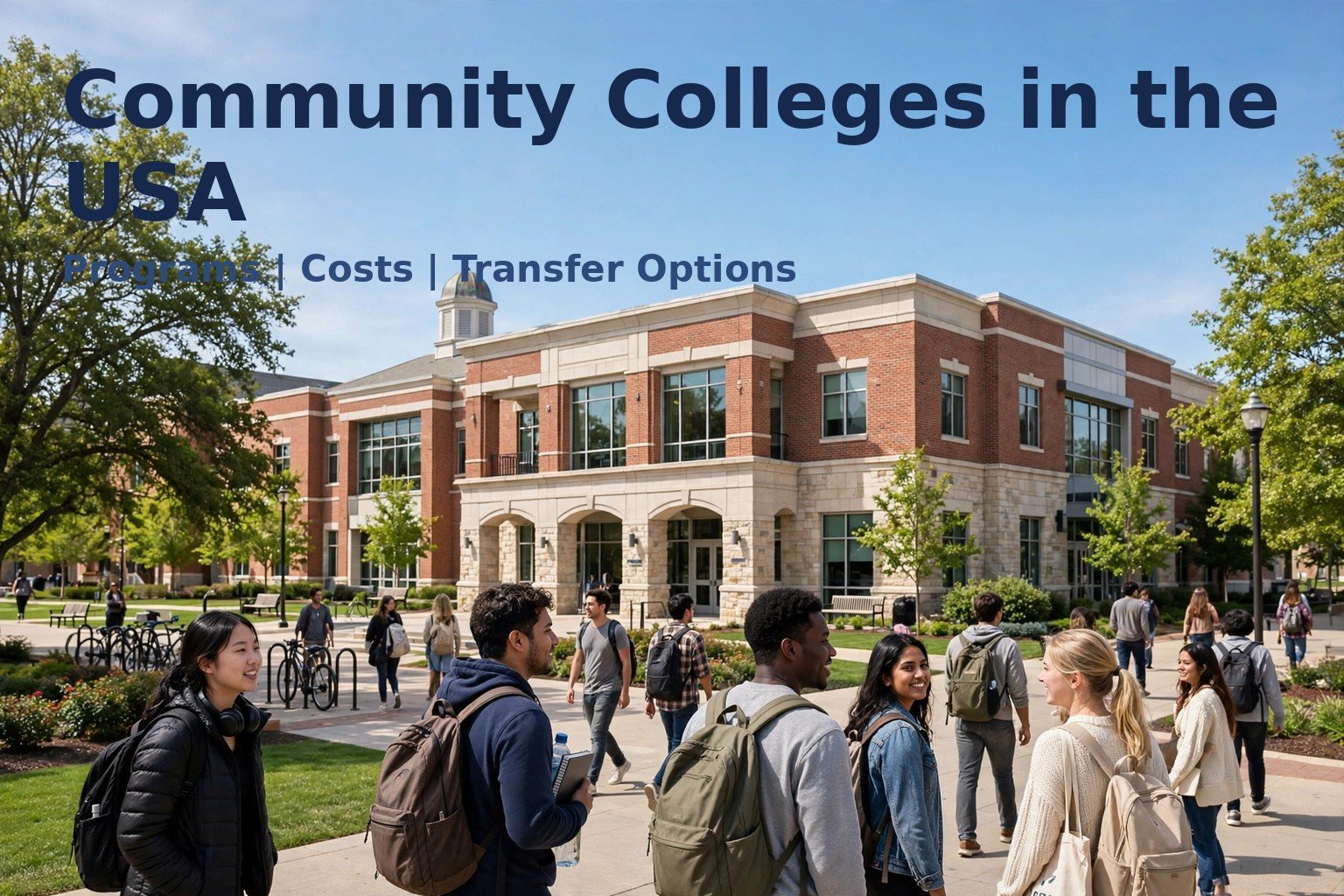
Community Colleges
Community colleges can be an option for students who want a shorter program, career-focused education, or a pathway toward a bachelor’s degree. Programs and transfer arrangements vary by institution and state.
Before enrolling, check the specific college’s program length, transfer agreements, admissions rules, total costs, student support, and available financial aid.
Undergraduate and Graduate Degrees
Undergraduate education generally includes associate and bachelor’s degree programs. Graduate education includes master’s, doctoral, and other advanced programs, while professional programs prepare students for particular careers or licensed professions.
The structure varies by institution and field. Compare the degree awarded, curriculum, length, admission requirements, and career or further-study pathway.
Majors and Fields of Study
A major is a student’s primary field of academic study in many undergraduate programs. Colleges may offer majors in areas such as business, computer science, engineering, education, health, communications, social sciences, natural sciences, and the arts.
When researching a major, examine the actual courses, required credits, concentration options, experiential learning, internships, faculty resources, and pathways after graduation.
How College Admissions Work
U.S. college admission processes vary by institution and program. Requirements may include an application, academic records, essays or short responses, recommendations, test scores where required or considered, an application fee or fee waiver, and other materials.
Students should use the institution’s official admissions page for current requirements and deadlines. A general national rule should not be assumed to apply to every college.
College Costs: Look Beyond Tuition
College cost is more than tuition alone. Federal Student Aid describes cost of attendance as a broader estimate that can include tuition and fees, books and supplies, food, housing, and other eligible expenses. A school’s published cost is not necessarily the amount a student will pay after financial aid.
When comparing institutions, examine the full cost of attendance and the grants and scholarships offered.
Financial Aid and Net Price
Financial aid can include grants, scholarships, work-study, and loans. Grants and scholarships generally do not have to be repaid when their conditions are met, while loans generally must be repaid.
Federal Student Aid recommends considering net price rather than relying only on sticker price. Students should also read each financial aid offer carefully, including work requirements and loan terms.
Why Accreditation Matters
Accreditation is part of the U.S. higher-education quality-assurance system. The U.S. Department of Education distinguishes between institutional accreditation and specialized or programmatic accreditation.
Accreditation can matter for transfer, eligibility for certain forms of financial aid, professional requirements, and recognition of an institution or program. Requirements differ by field and institution, so verify the current accreditation status of the specific school or program.
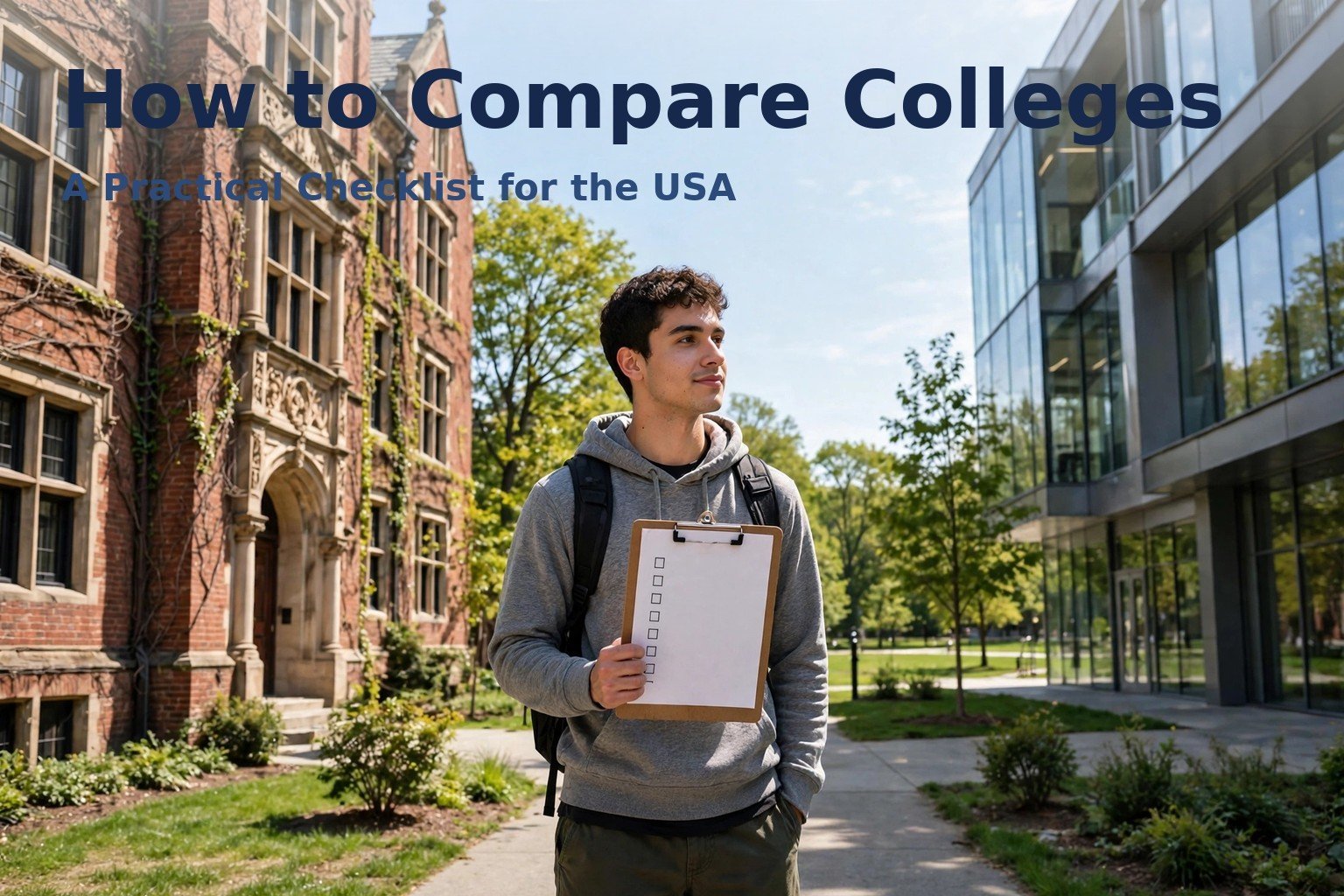
How to Compare Colleges
- Programs and majors available
- Admission requirements and deadlines
- Total cost of attendance
- Grants and scholarships
- Net price and financial aid offer
- Accreditation
- Graduation and completion information
- Location and campus setting
- Learning environment
- Housing and transportation
- Student support services
- Internship, transfer, or career resources
The Department of Education’s College Scorecard provides information for comparing colleges, including fields of study, costs, admissions, and results. NCES IPEDS provides institution-level data for researching and comparing institutions.
Official U.S. Resources for College Research
Use authoritative sources when verifying current college information:
- U.S. Department of Education: Find a College or Educational Program
- College Scorecard for college costs, admissions, fields of study, and results.
- NCES IPEDS for federal postsecondary institution data.
- Federal Student Aid for FAFSA and financial-aid guidance.
- U.S. Department of Education: College Accreditation for accreditation information and recognized agencies.
Third-party websites can help with discovery, but important details such as admissions deadlines, program availability, tuition, accreditation, and financial aid should be checked against the institution or an authoritative government source.
Frequently Asked Questions
What is the difference between a college and a university?
The terms are used differently by institutions. A university often offers a broader range of undergraduate and graduate programs, but the name alone does not determine an institution’s programs.
What types of colleges are available in the USA?
Common categories include public institutions, private nonprofit institutions, private for-profit institutions, community colleges, and specialized institutions.
How much does college cost in the USA?
Costs vary by institution, program, residency, housing, and financial aid. Look at the full cost of attendance rather than tuition alone, then compare grants, scholarships, and net price.
How can I compare U.S. colleges?
Compare programs, admissions requirements, costs, financial aid, accreditation, location, student services, and outcomes. College Scorecard and NCES IPEDS can provide comparable information.
Why should I check accreditation?
Accreditation can affect recognition of an institution or program, transfer considerations, certain financial-aid eligibility, and professional requirements. Check the current accreditation status for the specific school or program.
Related EduTop Mentor Guides
- Education in the USA: Complete Guide
- College Admissions in the USA
- FAFSA 2026–27 Guide
- Types of College Degrees
- How to Compare Colleges
Last reviewed: September 2026

4 thoughts on “Colleges and Universities in the USA: Types, Degrees, Admissions, and Costs”