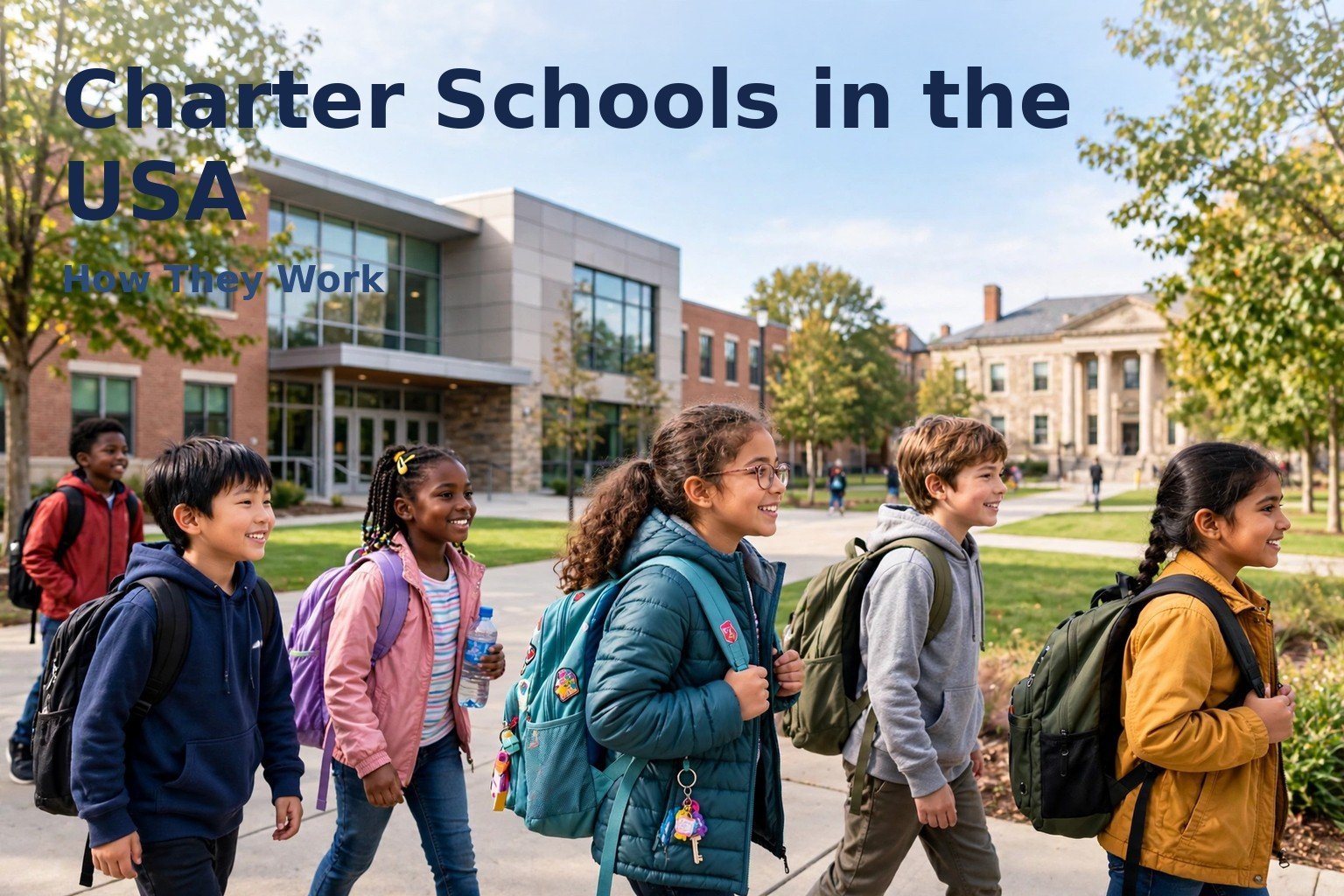
Charter schools are publicly funded schools that operate under a charter or similar authorization. They can have greater operational flexibility than traditional public schools, while remaining subject to applicable public education requirements.
What Is a Charter School?
A charter school operates under a charter that sets expectations for the school. The authorizing structure and rules vary by state.
How Charter Schools Differ
Charter schools may have different curricula, schedules, educational models, or organizational structures. They remain public schools, but their governance and operating arrangements can differ from district-run schools.
Admissions and Enrollment
Many charter schools are open to eligible students without tuition, but enrollment rules vary. When applications exceed available seats, a school may use a lottery or another state-approved process.
Programs and Educational Models
Charter schools can focus on different educational approaches, such as STEM, arts, college preparation, language learning, or project-based learning. Families should review the actual program rather than assume all charter schools are alike.
How to Evaluate One
- Read the school’s charter and official information.
- Review curriculum and student services.
- Check enrollment and transportation rules.
- Understand accountability and performance information.
- Compare the school with other available options.
FAQs
Do charter schools charge tuition?
Charter schools are generally public schools and do not charge tuition like private schools, though specific rules and other costs can vary.
Are charter schools the same as private schools?
No. Charter schools are public schools operating under a charter or similar authorization.
Can any student attend a charter school?
Eligibility and enrollment rules vary by state and school.
Last reviewed: September 2026.

One thought on “Charter Schools in the USA: How They Work”