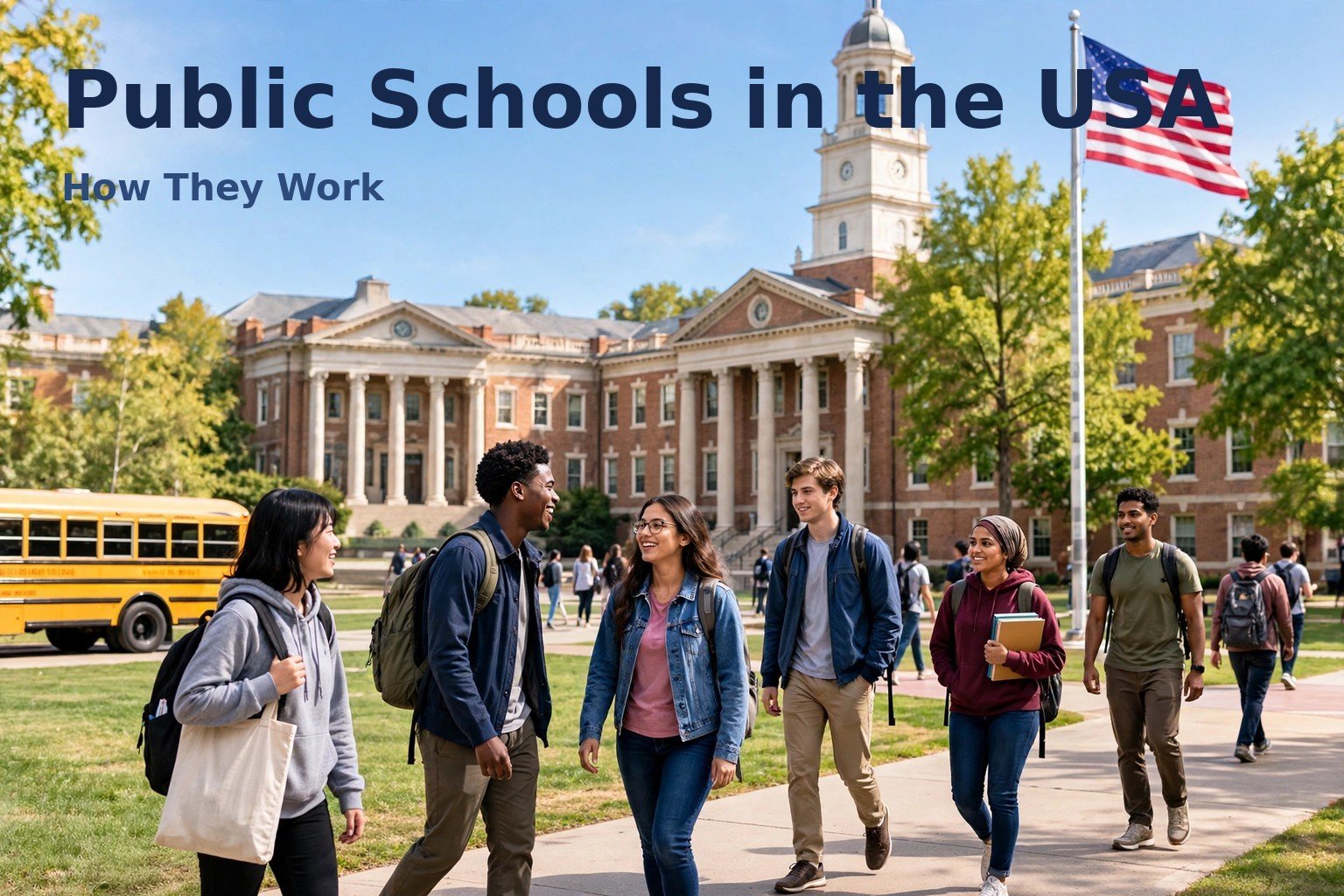
Public schools are a major part of K–12 education in the United States. They are generally operated through state and local education systems, with funding, enrollment rules, curriculum, and accountability varying by state and district.
What Is a Public School?
Public schools are generally publicly funded and serve students according to applicable state and local rules. Traditional public schools are usually assigned based on residence, although school choice policies can create additional options.
Who Oversees Public Schools?
Education responsibilities are shared across federal, state, and local levels. States establish education requirements and standards, while local districts commonly manage schools and services. Federal programs can provide funding and establish certain requirements.
Grades and Programs
Public schools commonly serve elementary, middle, and high school grades, but grade configurations differ by district. Schools may also offer special education, career and technical education, advanced coursework, athletics, arts, and other programs.
Enrollment
Enrollment rules vary by district. Families may need proof of residence, immunization records, student records, and other documents. Some districts offer open enrollment or choice programs.
School Choice
Options can include magnet programs, open enrollment, charter schools, and other state or district programs. Availability and eligibility vary.
How Parents Can Research
- Check the district website.
- Review school boundaries and enrollment rules.
- Compare programs and services.
- Understand assessment and graduation requirements.
- Visit the school when possible.
FAQs
Are public schools free?
Public K–12 education is generally publicly funded, but families may still encounter costs for activities, transportation, supplies, or optional programs.
Can a student attend any public school?
Not necessarily. Assignment and choice rules depend on state and district policy.
Related EduTop Mentor Guides
Last reviewed: September 2026.